When pavement is loose, sunken, or broken through, a surface coating alone is not the answer. Repair starts with understanding the damaged area, what is happening beneath it, and how the surrounding property is used.
Serving the greater Phoenix metroLook past the surface
Signs it may be time for repair.
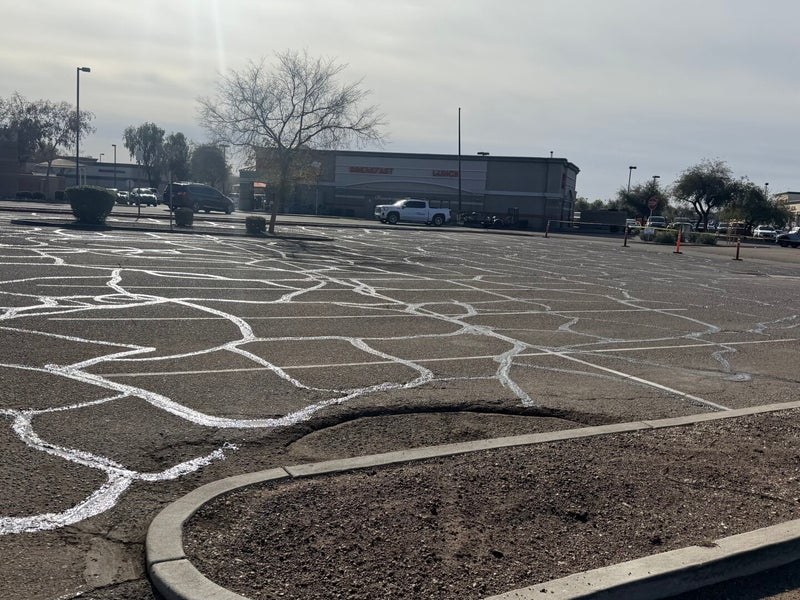
Potholes, crumbled edges, depressed areas, and sections that move under traffic can indicate that the issue is more than cosmetic. Water can travel beneath an opening, and vehicle loads can make a weak area spread beyond the original damage.
A wide photo helps show the context around the issue. Let RDZ know if the area sits near an entrance, drain, drive lane, delivery path, or parking stall. Those details help frame the repair conversation.
Define the repair area
Repair work needs a clear boundary.
The useful question is not only where the visible damage starts, but where stable pavement begins again. A repair scope should consider the surrounding edges and any underlying condition that may be contributing to the failure.
The exact approach depends on the site and the damage found. A request can start with photos and a property location; an on-site review can then clarify the repair area, access needs, and the work that is appropriate.
Connect repair to the rest of the lot
Plan what comes after the patch.
After a damaged section is addressed, property owners may want to consider how it relates to the wider surface. Crack treatment, sealcoating, or new striping can be separate conversations based on the condition of the remaining pavement.
If a repair is in a traffic lane or parking area, reopening and circulation matter. Bring those constraints into the early discussion so the work can be planned around the property instead of the other way around.