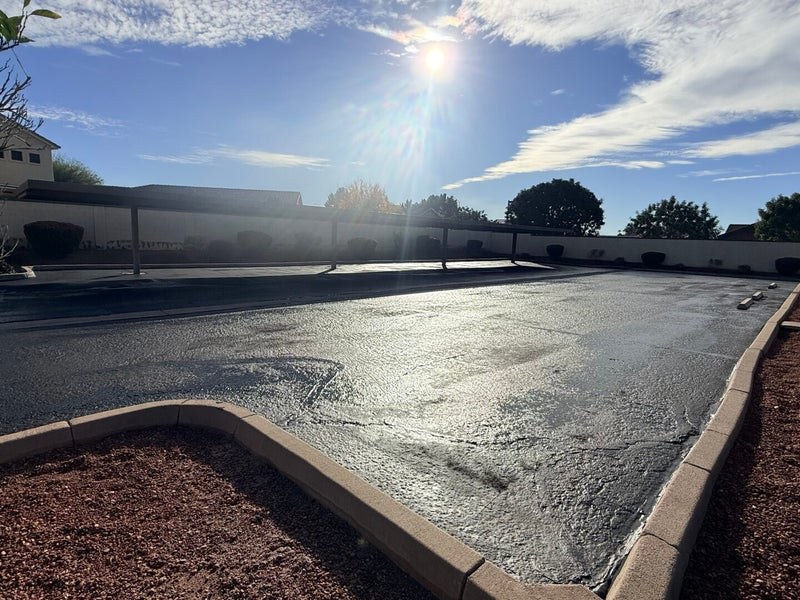
Sealcoating is a protection measure for asphalt that is still structurally sound. It helps renew the surface after sun exposure and traffic wear, but it is not a substitute for repairing a failed base, potholes, or serious drainage problems.
Serving the greater Phoenix metroRead the surface
When sealcoating may make sense.
Fresh asphalt is dark because its binder still protects the aggregate beneath. Phoenix heat and ultraviolet exposure gradually dry that binder, leaving the surface dull, gray, and more open to wear. High-traffic entrances, drive lanes, and parking stalls can show that aging first.
A weathered but stable surface may be a candidate for sealcoating. Loose aggregate, small surface cracks, and faded color are useful things to mention in a request. If the surface flexes, crumbles, or has standing water and potholes, RDZ can discuss repair before a coating is considered.
Prepare before coating
A clean surface comes first.
The work begins with the actual condition of the pavement. Loose debris, dirt, and material that would interfere with the coating have to be addressed before treatment. Minor cracks may also need attention so an open path is not simply covered from view.
The appropriate preparation and sequence depend on the site. Parking access, delivery periods, temperature, surface condition, and whether markings need to be renewed all affect the conversation. A written scope should reflect the property rather than a one-size-fits-all package.
Plan the return to service
Keep traffic in the plan.
A coating needs adequate time and appropriate conditions before vehicles return. A surface may look dry before it is ready for turning tires or heavier traffic. Ask for reopening guidance tied to the material and conditions at your property.
For parking areas, striping is often part of the larger planning picture. Fresh markings can be considered after the surface work, with entrances and access routes identified in advance.