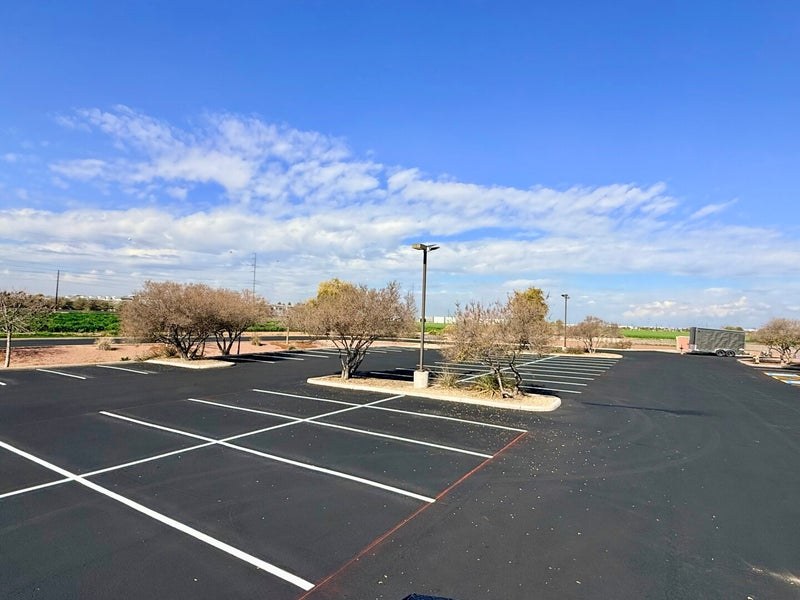
Fresh markings do more than sharpen the appearance of a lot. They help people understand where to park, drive, stop, and walk. The most useful first step is to share the current layout and explain where circulation feels unclear.
Serving the greater Phoenix metroRead the layout
When markings need attention.
Faded stalls, unclear directional arrows, worn fire-lane paint, and difficult-to-see loading areas can make a property harder to navigate. A fresh sealcoat or repair can also cover older markings, creating the need for a coordinated restriping plan.
Before a layout is changed, it is useful to identify which markings already work and which points create confusion. Parking stalls, entrances, accessible spaces, delivery routes, and pedestrian paths are part of the conversation—not just the visible lines.
Set the site up first
Good striping begins before the paint.
Surface condition affects how markings are planned. Dirt, loose material, fresh surface treatment, and traffic access all matter when a property is being prepared. The work area also needs a clear plan for the people who use it every day.
RDZ can review the scope around the active property: where cars enter, when deliveries arrive, and what needs to remain available. That context supports a clearer sequence and helps avoid treating an operating lot like an empty canvas.
Keep the result legible
Plan around real traffic.
The job is not only to apply paint; it is to make the property easier to understand. A written scope can clarify whether the request is a refresh of existing markings or a discussion about a changed layout.
If parking, access, or code questions apply to the property, raise them early. The appropriate layout and markings should be confirmed for the specific site.