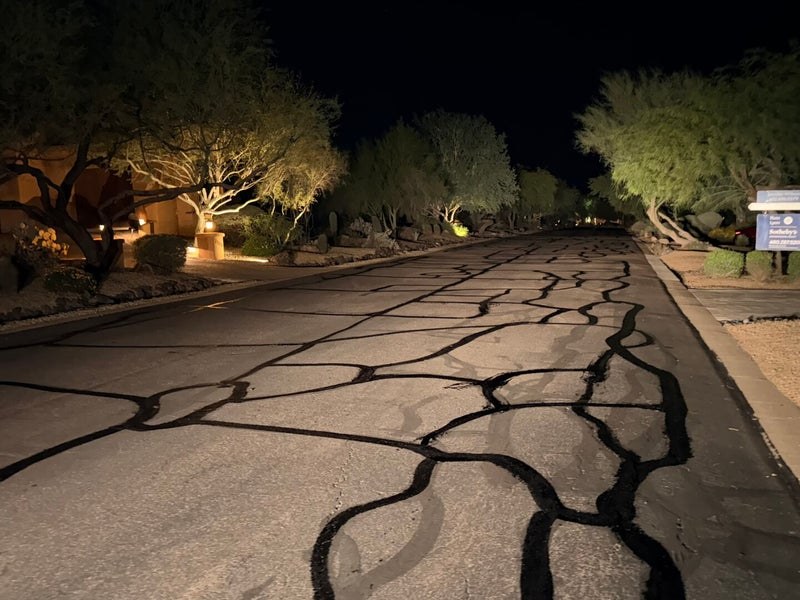
Cracks are a useful early signal—not every crack has the same cause or needs the same response. A photo of the opening and the pavement around it gives RDZ a better place to start than a generic treatment recommendation.
Serving the greater Phoenix metroSee the pattern
What to notice before reaching out.
Linear cracks, small openings at the pavement edge, and surface fractures can create paths for water, irrigation runoff, and debris. Phoenix temperature swings and daily vehicle traffic place ongoing stress on those weak points.
It helps to distinguish a relatively defined opening from a broad web of broken or moving asphalt. Weeds, loose edges, potholes, or a depressed area are also worth noting. They can point to a condition that needs more than a surface sealant.
Start with preparation
The opening has to be ready.
Crack sealing works best when the area is clean and dry enough for the material being used. Debris and loose material inside an opening can interfere with the bond, so the work begins with evaluating and preparing the crack itself.
RDZ can discuss the practical sequence for your property: what areas need to stay open, how parking or drive access works, and whether crack treatment should be coordinated with repair or sealcoating. The scope should match the actual surface, not just the presence of a crack.
Protect the wider surface
Cracks are one part of pavement care.
Closing a defined opening can be part of a broader preservation plan, especially where the remaining pavement is stable. After a close look at the site, surface protection or refreshed markings may be relevant next steps.
If cracks are extensive, edges are breaking down, or water is collecting in the same area, mention that in the request. Repair may be the more useful first conversation.